Aging, hiding in plain sight
Have you ever noticed your parents getting older? Not in the obvious ways. Not the grey hair or the birthday that suddenly says 60. I mean the tiny things.

A few months ago, my mom and I were heading to the market. As we were walking towards the car, she suddenly stopped and said “I forgot the keys inside.”
So we went back inside, checked the kitchen, the table, her bag and the kitchen again because, apparently, that’s how looking for things works. Five minutes later, she found them and we left. It was such a small thing. The kind of thing you forget five minutes later. But it got me thinking about how strangely subtle aging can be.
Most of us don’t wake up one morning and suddenly feel older. It happens through tiny shifts. A little more effort to do something that was once effortless. A new habit to make up for something that doesn’t work quite the same way anymore. Small adjustments that slowly become part of everyday life.
And this is why ageing in India research is becoming increasingly relevant. The country is entering a defining demographic shift, with a young population alongside a rapidly growing older generation.

By 2067, India is projected to be home to the world’s largest population of older adults.
But numbers alone don’t tell us what it actually feels like to grow older.
That became one of the starting points for a research project we undertook with one of India’s premium bath and kitchen brand.
Looking beyond what people say
One thing became clear quite early in our research approach: simply asking people how they felt about aging wasn’t going to get us very far. Tell someone they’re “aging” and they may push back. Because how old you are doesn’t al
ways match how old you feel.
So we had to look beyond what people said and understand what they actually noticed, did and experienced in everyday life. This meant making our conversations a little more exploratory. Alongside our interviews, we brought in bits and pieces of everyday India from familiar songs, famous movie dialogues, cultural references and a rich mix of images to spark memories, associations and feelings, making them tangible enough for people to react to, arrange and interpret. we used image sorting and card sorting as research tools which helped us give them something tangible to react to, arrange and interpret.
And that changed the conversation.

A picture triggered a memory. A card prompted an association. The way someone grouped things revealed connections they may never have thought to articulate directly. One of the recurring sentiments we encountered captured this tension “Body thodi slow ho gayi hai, mind still sharp hai” - the interesting shifts were actually happening somewhere between the two, in the everyday negotiations with a changing body, adapting confidence, subtly shifting independence and even the way people ask for or accept help.
The home knows before we do
The second half of the study took us out of the question-answer setting and into people’s sanctuaries. They showed us their favourite corners, the spaces they rarely used, where they would unwind, where they focused and how they had arranged things around themselves. And this revealed something that a straightforward question about aches, pains or aging needs probably wouldn’t have. Their homes were full of quiet adaptations.
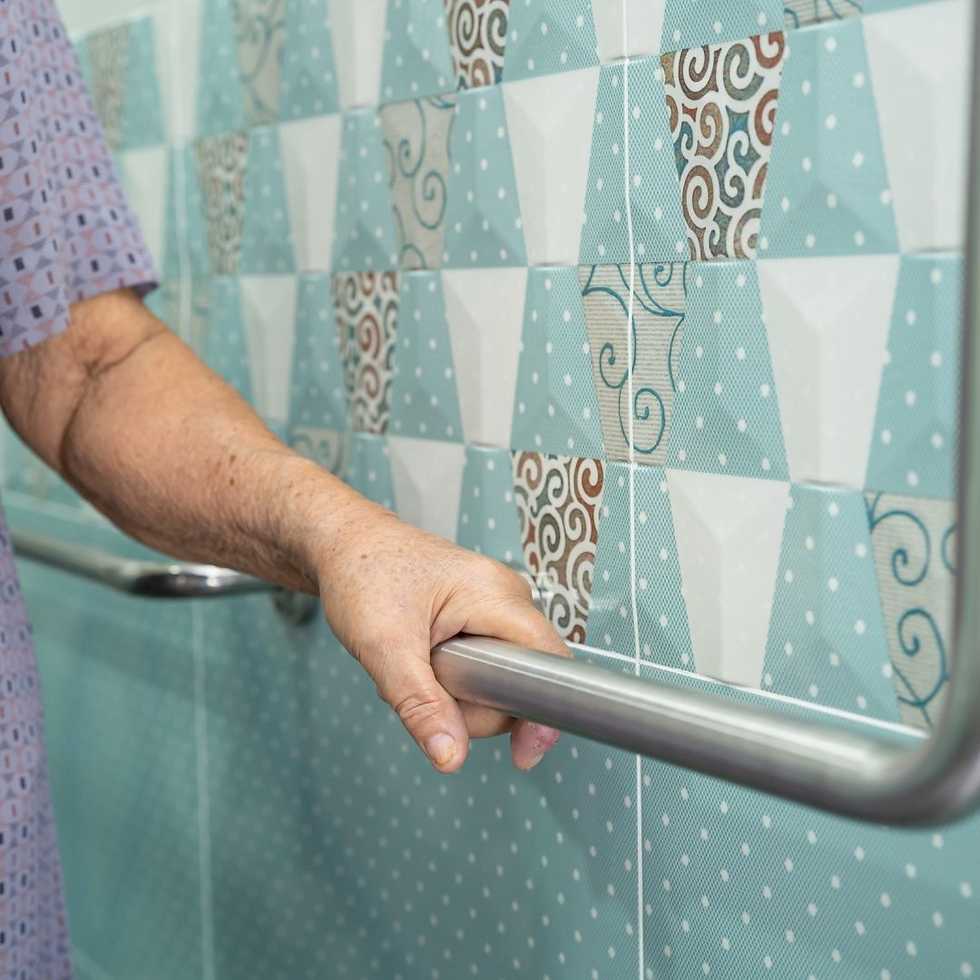
A piece of furniture moved just so. Something kept within easier reach. A particular chair that had slowly become the preferred one. Small workarounds that had become so normal that people barely thought of them as adaptations anymore. People were constantly negotiating with their spaces and quietly modifying them around their changing bodies and needs often without consciously thinking of themselves as “adapting.”
This is where the research started becoming particularly interesting. And perhaps that is one of the things design research makes especially visible. The answers aren’t always in what people tell you. It’s in the nuances.
From individual stories to something bigger
This is where research starts becoming more than simply collecting observations.
Across conversations, sensorial cue techniques and time spent inside people’s homes, individual stories began connecting. Patterns started emerging. And those patterns helped us move from what people were doing to understanding why they were doing it.
Because beneath every behaviour is a meaning.
And in a country as culturally layered as India, those meanings are often shaped by much more than age alone but by habits, resourcefulness, family structures, ideas of independence and the way people have learnt to live with change.
For us, that is where the real value of design research lies.
Not in finding one big answer, but in uncovering enough small truths to see something bigger.

And once those patterns start to become clear, that’s when research can begin to do what it is really meant to do: give strategy something real to build on.
For this project, that strategy took shape as a framework, one that mapped the experience of aging through the core values people wanted to hold on to and the enablers that could help them continue to live by those values. Understanding these values gave the teams a stronger foundation for innovation not by starting with products or solutions, but by first understanding what people were trying to preserve in their lives and then exploring how those values could shape new opportunities.
About
Crossed Design is an award-winning company helping organisations and their stakeholders reframe and solve complex challenges.
We work with global brands, social organisations and think tanks to imagine what’s possible, shape better futures and design solutions that are sustainable and built to last.
With over 10 years of experience working across India and for organisations across the Global South, we bring a deep understanding people, behaviours, cultures and systems behind a challenge to find what is really shaping it.
More Crossed Design Verticals

